
How to Choose the Right Gym Cross Trainer Machine Supplier in India
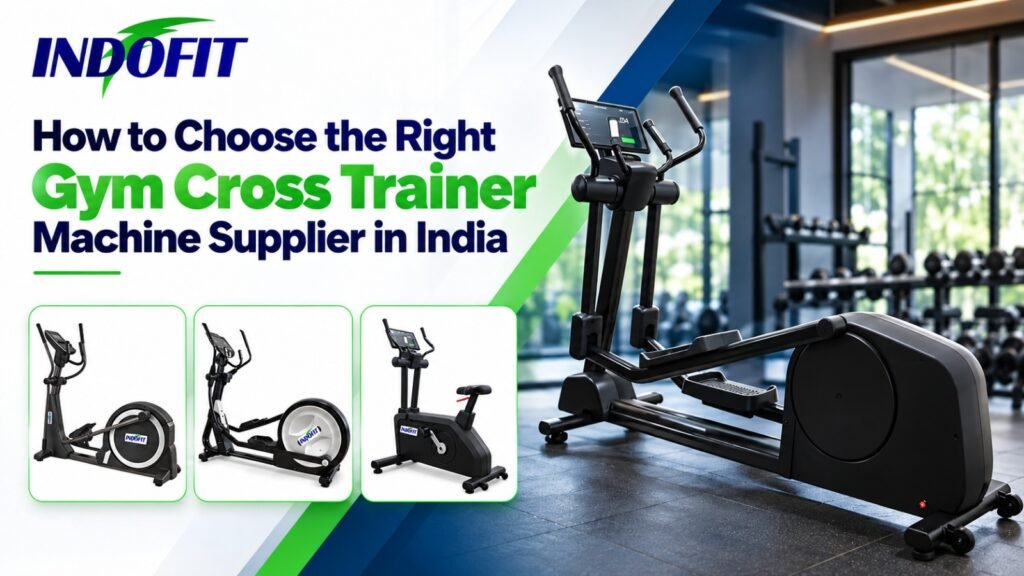
Choosing the right Gym Cross Trainer Machine Supplier is an important decision when you are setting up a commercial gym, fitness studio, hotel gym, corporate wellness centre or upgrading an existing cardio section. A cross trainer may look like a straightforward cardio machine, but commercial equipment is very different from a basic machine intended for occasional home workouts. In a busy gym, the equipment may be used by dozens of people every day. That means frame strength, resistance quality, stride length, user weight capacity, spare parts and after-sales service all matter. For gym owners in India, the goal should therefore not be to simply find the lowest quotation. The better approach is to work with a Gym Cross Trainer Machine Supplier that can provide suitable commercial-grade equipment and dependable support throughout the machine’s working life. Indofit Solutions provides gym and fitness equipment for commercial fitness facilities and offers multiple cross trainer configurations for different requirements. Its current cross trainer range includes models with features such as self-generating operation, adjustable resistance, digital displays and commercial user capacities. Quick Answer: What Should You Look for When Choosing a Gym Cross Trainer Machine Supplier? When selecting a Gym Cross Trainer Machine Supplier, check the machine’s frame construction, resistance system, stride length, maximum user capacity, console, warranty, installation support, spare-parts availability and after-sales service. For commercial gyms, specifications should be evaluated alongside expected daily usage. A cheaper machine can become expensive if it regularly breaks down, has difficult-to-source parts or remains unusable while waiting for service. The right supplier should help you choose equipment according to your facility, expected member traffic and budget instead of simply trying to sell the most expensive model. Key Takeaways Table of Contents What Is a Cross Trainer Machine? A cross trainer, commonly called an elliptical trainer, is a stationary cardio machine that allows the user’s feet to travel through a continuous elliptical movement. Unlike running, where the feet repeatedly leave and strike the surface, a user’s feet remain supported by the pedals during a cross-trainer workout. The moving handlebars found on many machines also allow the upper and lower body to participate simultaneously. That makes the machine useful for cardiovascular exercise while offering a comparatively low-impact movement pattern. Commercial models are designed differently from lightweight home machines. A commercial Gym Cross Trainer Machine Supplier will generally focus on machines with stronger frames, higher weight capacities, stable pedal systems, durable bearings, smoother resistance and components intended for frequent use. How Does a Cross Trainer Work? The user stands on two pedals and moves them through an elliptical path while pushing and pulling the handlebars. Resistance creates the workout load. Depending on the model, resistance may be magnetic, electromagnetic or controlled through another commercial resistance mechanism. Increasing the resistance makes it harder to maintain the same movement. Modern machines may display: For example, current Indofit cross trainer specifications include models displaying time, distance, speed, calories and heart-rate information. One model offers 1–24 resistance levels, while another commercial model lists 1–20 resistance levels. These differences are exactly why specifications should be reviewed carefully before purchasing. Why Do Commercial Gyms Need Cross Trainer Machines? A commercial gym normally serves people with very different training goals. Some members enjoy running, while others prefer cycling, rowing or lower-impact cardio. Cross trainers broaden that choice. They can be particularly useful for beginners, general fitness members and users who prefer cardiovascular training without the repeated impact associated with running. Another advantage is upper- and lower-body involvement. Members can use the handles and pedals together, creating a coordinated full-body movement. From a gym owner’s perspective, the real consideration is equipment utilisation. A cardio floor that offers only treadmills limits user choice. Combining treadmills, bikes, cross trainers and other cardio equipment can serve a wider member base. A knowledgeable Gym Cross Trainer Machine Supplier can help determine how many units make sense according to your available floor space and expected membership. What Should You Look for in a Gym Cross Trainer Machine Supplier? Choosing a Gym Cross Trainer Machine Supplier requires looking beyond catalogues and sales discounts. Here are the areas that deserve the most attention. Machine Build Quality Start with the fundamentals. Inspect the frame, pedals, moving arms, bearings, joints and overall stability. Commercial equipment should feel stable during exercise and should be engineered for repeated use. Ask the supplier for detailed specifications instead of accepting broad terms such as “heavy duty” without supporting information. Commercial-Grade Construction A home cross trainer might be used for 30–60 minutes a day. A commercial machine can experience significantly more use. That changes the buying requirement. A Gym Cross Trainer Machine Supplier serving commercial facilities should be able to recommend models specifically intended for frequent usage. Consider: The machine should match your actual operating environment. Resistance System Resistance determines how smoothly users can increase or decrease workout intensity. Commercial gyms should prioritise predictable, smooth adjustment across different resistance levels. Magnetic and electromagnetic systems are commonly found across the market, while self-generating commercial machines can reduce dependence on an external power connection for basic operation. Indofit Solutions currently lists self-generating cross trainers within its range, including the IF-1117S and IF-1117 commercial models. Stride Length Stride length is sometimes overlooked even though it has a major effect on user comfort. A very short stride can feel restrictive for taller users, while a properly selected commercial machine should accommodate the facility’s expected member profile comfortably. One Indofit commercial trainer, for example, lists a 55 cm stride length. Ask your Gym Cross Trainer Machine Supplier about stride specifications before ordering rather than relying only on photos. Console and Display Features A useful console should make workout information easy to understand. Common measurements include time, speed, distance, calories and heart rate. More advanced machines may include larger displays, workout modes or touchscreen functionality. Indofit’s current range includes traditional displays as well as an IF-1117S model with a 21.5-inch touchscreen. Do not automatically assume that the biggest screen is the best purchase. Choose technology according to
How to Choose the Best Air Bike Gym Equipment Supplier in India
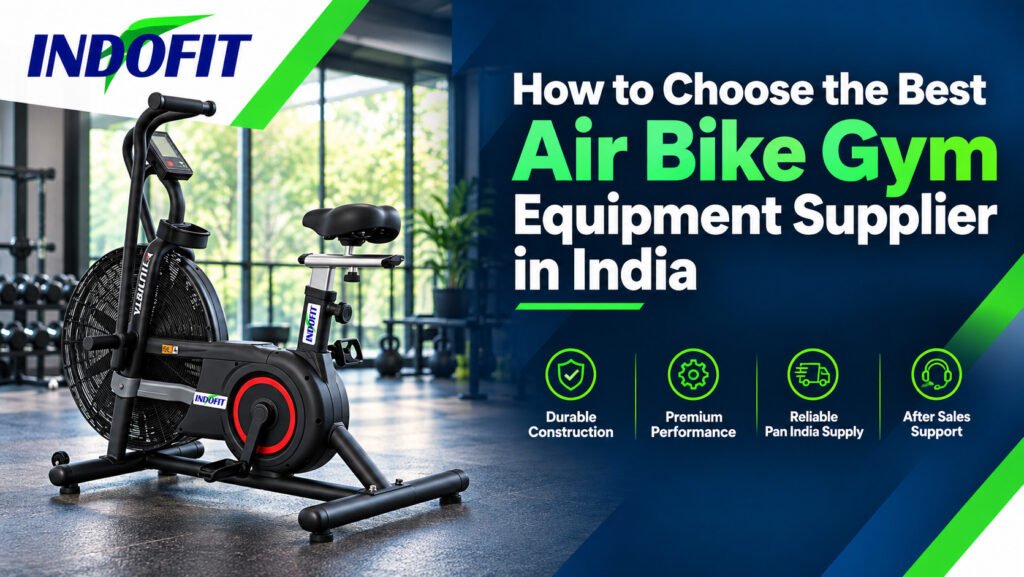
Choosing the right Air Bike Gym Equipment Supplier is an important decision when you are setting up a commercial gym, functional training studio, sports facility, corporate fitness centre, or performance training space. An air bike may look relatively simple, but its frame quality, fan resistance, drive mechanism, moving handles, pedals, seat adjustment, console and internal components all affect how well it performs under regular use. For a commercial facility, the buying decision should therefore go beyond appearance and initial price. You need to consider durability, training experience, equipment specifications, servicing, availability of spare parts and the support offered by the supplier. A professional Air Bike Gym Equipment Supplier should be able to explain the machine clearly, provide relevant specifications and help you choose equipment according to expected usage. Indofit Solutions offers gym and fitness equipment for different commercial requirements in India. Its current equipment range includes the IF-671D Air Bike, giving gym owners another option to consider when planning a cardio or functional training area. How to Choose the Best Air Bike Gym Equipment Supplier in India When selecting an Air Bike Gym Equipment Supplier, check the quality of the frame, drive system, fan mechanism, display, machine dimensions and overall construction. For a commercial purchase, you should also ask about warranty terms, service arrangements, spare parts, delivery and installation before placing an order.Do not select an Air Bike Gym Equipment Supplier based on price alone. A machine that is suitable for occasional home workouts may not necessarily be appropriate for repeated commercial use. Key Takeaways Table of Contents What Is an Air Bike and How Does It Work? An air bike is a stationary cardio machine that generally combines pedals, moving handles and a large fan.Unlike exercise bikes that rely only on preset resistance levels, a typical fan-resistance air bike responds to the user’s effort. As the user pedals and works the handles harder, the fan turns faster and resistance increases.This creates a simple training principle: More effort = more resistance. Because the arms and legs can work together, an air bike is commonly used for full-body cardiovascular conditioning, interval training and high-intensity workouts.For commercial buyers, however, the training concept is only part of the decision. A knowledgeable Air Bike Gym Equipment Supplier should also help buyers understand the specifications and intended usage of the particular model being considered. Why Choose an Air Bike for a Commercial Gym? Commercial gyms need cardio equipment that can support different training styles and fitness levels. Air bikes are particularly useful when a facility wants to offer short, intense conditioning sessions alongside conventional cardio machines. Full-Body Training The moving handles allow users to involve the upper body while the pedals engage the lower body. This creates a different workout experience from a standard stationary bike. Effort-Based Resistance With a fan-resistance system, resistance responds to how much effort the user produces. Beginners can work at a comfortable pace, while experienced users can increase intensity simply by pushing harder. Useful for Interval Training Air bikes fit naturally into interval-based programming. Trainers can incorporate them into timed rounds, conditioning circuits and functional workouts. No Complicated Resistance Selection Because resistance can respond directly to effort, users do not necessarily need to stop repeatedly to change resistance settings during an interval. Suitable for Different Fitness Facilities Depending on the model and specifications, air bikes may be considered for commercial gyms, functional fitness facilities, sports training centres and other performance-oriented fitness environments. This versatility is one reason choosing the right Air Bike Gym Equipment Supplier matters. What Should You Look for in an Air Bike Gym Equipment Supplier? Buying commercial fitness equipment is different from purchasing a small home fitness product. The supplier should be evaluated along with the machine. Product Quality and Build Start by examining the overall construction. Ask the Air Bike Gym Equipment Supplier for information about: A heavier machine is not automatically better, but commercial equipment should feel stable during demanding workouts. Resistance System Resistance is central to the air-bike experience.A true fan-resistance system uses airflow to create resistance. As the fan rotates faster, resistance increases. Before purchasing, ask the Air Bike Gym Equipment Supplier to explain exactly how the resistance system on the selected model operates.The movement should feel predictable and suitable for the intended workout environment. Commercial-Grade Construction A commercial facility can have many different people using the same machine throughout the day.That makes construction quality especially important.Pay attention to frame stability, moving joints, crank components, pedals, handles, bearings and the drive mechanism. Equipment intended for commercial use should be selected with repeated operation in mind. Warranty and After-Sales Support A warranty is useful only when you understand what it actually covers. Before confirming an order, ask: A responsible Air Bike Gym Equipment Supplier should be able to clarify these terms before the sale. Spare Parts Availability Even durable commercial machines contain components that can eventually require maintenance or replacement.Ask about the availability of commonly serviced components and how replacements are handled. Long-term spare-parts support can be more important than saving a small amount on the original purchase. Delivery and Installation Commercial equipment can require careful transport, assembly and positioning.Confirm whether your quotation includes transportation, unloading, installation and basic operating guidance. Do not assume all these services are included automatically. Customization Options If customization is important to your project, discuss it before placing the order.Depending on the supplier and product, possible requirements could relate to equipment selection, gym layout, quantity or other project-specific considerations.Never assume customization is available without confirming it with the Air Bike Gym Equipment Supplier. Supplier Experience and Reputation Finally, evaluate the business behind the machine.Look at its product range, physical contact information, technical information, existing equipment categories and service process. A supplier that understands complete gym projects may be better positioned to discuss how an air bike fits into your overall cardio and functional-training mix. Air Bike Manufacturer vs Supplier: What’s the Difference? A manufacturer produces equipment, while a supplier sells or distributes equipment to customers. Some fitness-equipment businesses
