
Wunda Chair Exercises for Beginners: Building Core Strength Safely
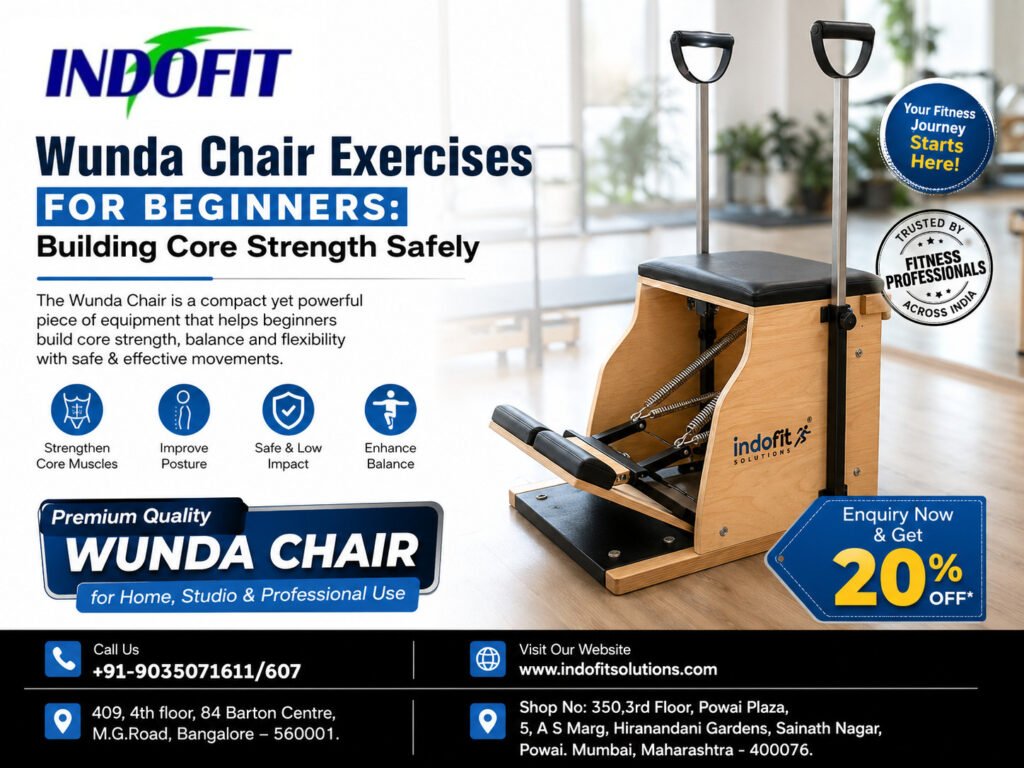
If you have spent any time inside a Pilates studio, you have probably noticed a small, boxy piece of equipment tucked into a corner that looks nothing like the reformer or the barrel. It has a seat, a set of springs, and two pedals that seem to demand more balance than they let on. That is the Wunda Chair – one of Joseph Pilates’ original inventions and quietly one of the most effective tools for building deep core strength, stability, and control. For beginners, the Wunda Chair can look intimidating. It is compact, it is spring-loaded, and unlike a mat class, there is no forgiving floor to catch you if your alignment slips. But that same intensity is precisely why the chair is so valuable. Used correctly, it teaches your body to stabilize from the inside out, strengthens muscles that other equipment tends to skip, and translates directly into better posture, balance, and everyday movement. This guide walks you through what the Wunda Chair is, why it belongs in a beginner’s training plan, and a set of safe, foundational exercises to get you started – without wrecking your form or your confidence in the process. What Exactly Is a Wunda Chair? The Wunda Chair is one of the earliest pieces of equipment Joseph Pilates designed, originally built from a modified chair with springs attached underneath a movable pedal. Today’s studio version – often called a Stability Chair – keeps that same core idea: a raised seat platform, a spring-loaded pedal beneath it, and handles or a bar for support depending on the exercise. What makes it unique compared to a reformer or mat work is the base of support. On a mat, your entire body is in contact with the floor. On the chair, you are often balancing on a small seat or standing on a narrow pedal, with only your own muscular control keeping you upright and aligned. This forces your deep stabilizing muscles – particularly the transverse abdominis, pelvic floor, and the small muscles around the spine – to switch on in a way that larger, more familiar exercises simply do not require. It is a compact piece of equipment, which is part of why it has become popular not just in studios but in home gyms and boutique fitness spaces across India, where floor space is often at a premium but the demand for functional, joint-friendly training keeps growing. Why the Wunda Chair Is Ideal for Core Training It Builds Strength From the Inside Out Most beginner core routines focus on visible muscles—the rectus abdominis, the “six-pack” muscle. The Wunda Chair does something different. Because nearly every exercise on it requires you to resist the pull of the spring while keeping your pelvis and spine stable, you end up training the deeper stabilizing muscles that actually protect your lower back and support good posture. This is the same muscular system that keeps you upright when you are carrying groceries, twisting to grab something off a shelf, or sitting at a desk for eight hours. It Improves Balance and Proprioception Because the working surface is narrow and often unstable, your body has to constantly recalibrate its position. This sharpens proprioception – your sense of where your body is in space—which tends to decline early due to a sedentary lifestyle or aging, yet is often one of the last aspects that most gym equipment actually trains. It Is Low-Impact but High-Intensity The spring resistance on a Wunda Chair is smooth and controlled, unlike the jarring impact of running or jumping. This makes it appropriate for people recovering from injury, older adults, and anyone who wants a joint-friendly way to build strength. The constant resistance throughout the movement makes even simple-looking exercises surprisingly demanding. Complements, Not Replaces, Other Training Think of the Wunda Chair as the cherry on top of a complete fitness program, the piece that completes the circle between general strength work and clean, controlled movement. Pairing chair work with cardio equipment, free weights, or a reformer session gives you both power and control. Safety First: What Every Beginner Should Know Before Starting Before jumping into exercises, a few ground rules will keep your first sessions safe and productive. Start with lighter spring resistance. The springs on a Wunda Chair are not just about difficulty—they are about safety. If you apply too much resistance too early, the pedal can snap back in an unexpected way and upset your balance. Start with the lightest spring setting, and only increase when you have consistency of form. Prioritize alignment over range of motion. Pushing the pedal down as far as possible may seem appealing, but it doesn’t necessarily mean you’re “doing more.” Resist that urge. A smaller, controlled movement with a stable spine is far more effective – and far safer – than a larger movement with a wobbling torso. Keep your core engaged before you move, not after. This is a Pilates principle that applies everywhere: engage your deep abdominal muscles and pull your navel gently toward your spine before you initiate any movement, not as an afterthought once you are already moving. Breathe. Beginners often hold their breath during effortful movements, which increases tension and reduces stability. Exhale during the effort phase (usually when pressing the pedal down) and inhale as you control it back up. Work with a qualified instructor for your first few sessions. The Wunda Chair rewards precision. A few sessions with a certified Pilates instructor will help you internalize correct form before you start practicing independently. Check the equipment. Before every session, glance at the springs, hooks, and pedal hinge to make sure everything is securely attached. A well-maintained chair from a reputable studio or supplier will have smooth, predictable resistance – inconsistent or worn springs are a common cause of avoidable injury. Six Beginner-Friendly Wunda Chair Exercises Here are foundational exercises that build strength safely, in a logical progression from seated stability to standing control. 1. Seated Pedal Press This is often the
How to Choose the Right Gym Equipment Supplier in Mumbai
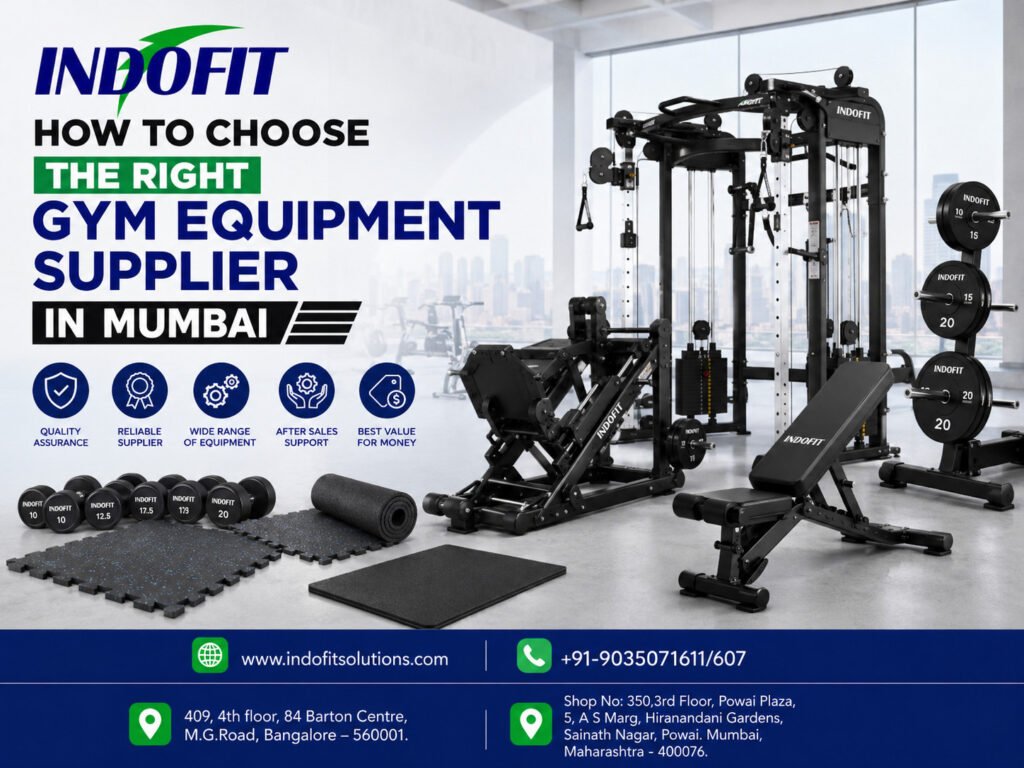
If you’re opening a commercial gym, a corporate fitness center, or even a serious home gym in the city, one decision will dictate everything else to follow—who you buy your equipment from. Machines wear out, guaranties are tested, and spare parts are consumed. Which is why selecting the right gym equipment supplier in Mumbai is not just a procurement exercise but a decision that will affect your member retention, your maintenance budget, and your reputation for years to come. At Indofit Solutions, we have sat down with dozens of gym owners, physiotherapy clinics, housing societies, and corporate HR teams across Mumbai—people who got burned once by a supplier who vanished after the sale or bought machines that looked appealing in a showroom but fell apart eight months later on the gym floor. We wrote this guide based on that experience. It guides you through precisely what to look for, what to steer clear of and how a genuine gym equipment supplier in Mumbai should behave from the initial inquiry call to the fifth year of servicing your machines. If you have already spoken with two or three vendors or are just beginning your search, this guide should help you narrow down the right gym equipment supplier in Mumbai for your project. Why the Right Supplier Matters More Than the Right Machine Most first-time buyers concentrate solely on the equipment—the brand name on the treadmill, the weight stack on the multi-gym, and the cushioning on the bench. That’s fair enough, but it’s only half the story. A gym runs on uptime. If your leg press breaks and the supplier takes three weeks to send out a technician, you lose members. If your treadmill belt needs replacing and the part has to be imported, because your supplier doesn’t stock spares locally, you could be looking at a month of downtime on one machine. The humidity and dust in Mumbai, along with the sheer volume of daily usage in a commercial setup, mean that equipment needs servicing more often here than in a quieter climate—one more reason the local presence of your gym equipment supplier in Mumbai matters so much. This is precisely why the relationship with your gym equipment supplier in Mumbai is as important as the spec sheet. You’re not just buying steel and motors; you’re buying ongoing support, spare parts availability, installation quality, and someone who answers the phone when something goes wrong. Understanding What You’re Actually Buying Before you even start comparing vendors, it helps to know the categories you’ll be shopping across, because different suppliers specialize in different segments: A supplier that is strong in cardio machinery may not have the same depth in strength equipment, and vice versa. Ask any shortlisted gym equipment supplier in Mumbai to show their actual catalog across all the four categories, not just the flagship products they lead with in advertisements. A good all-round gym equipment supplier in Mumbai should be able to confidently quote on strength, cardio, functional, and flooring in one go, without sending you to a “partner brand” for anything outside its core range. Key Factors to Consider Before You Sign a Purchase Order 1. Production Background vs. Trading or Resale Ask directly: Is the supplier a manufacturer of equipment, or are they selling imported or third-party stock? Neither answer is wrong per se, but it shifts what you should expect. A gym equipment supplier backed by a manufacturer in Mumbai usually has more control over build quality, can build equipment custom to your space, and can get spare parts quicker as they made the original components. A trader would also be able to offer a wider brand choice but may not be able to offer after-sales support if the original brand does not have a reliable service network in India. 2. Variety of products and customization A reputable gym equipment supplier in Mumbai goes beyond just offering a product range; it marks the beginning of a comprehensive service. Mumbai gyms come in all shapes and sizes—from a 400 sq ft studio in Andheri to a 5,000 sq ft gym in Powai. A reputable gym equipment supplier in Mumbai should be able to help you plan your floor layout, suggest equipment that will fit your actual space, and offer some level of customization (color, upholstery, branding) rather than pushing a fixed catalog at you regardless of fit. 3. Quality of Construction and Material Standards Check the gauge of the steel frame, the grade of the upholstery on the benches and seats, and whether the cables and pulleys are rated for commercial use versus home use. Much of the budget gear is made to home-gym specs and just isn’t designed to take twelve hours of commercial use a day. Request the technical specification sheet and not just the marketing brochure. A transparent gym equipment supplier in Mumbai will provide the necessary information without any hesitation. 4. After-Sales Service and Spare Parts Most buyers get it wrong here—they push hard on price and fail to ask about service. Before you confirm anything, ask: A good gym equipment supplier in Mumbai should have a local service team and not just a call center number that connects you to some other city. 5. Installation & Training Proper installation is not optional, especially for multi-station machines and motorized treadmills. Poor installation can lead to uneven wear, safety hazards, and warranty problems down the road. Ask if installation is included in the price and if your team will also receive basic maintenance and troubleshooting training. This is usually the best indicator of whether the gym equipment supplier in Mumbai considers delivery as the finish line or as the halfway mark. 6. Certifications and Conformance Look for ISO certification, CE marking on imported components, and BIS compliance, if applicable. This is not just paperwork but a reasonable proxy for whether a gym equipment supplier in Mumbai is consistent in its manufacturing and safety standards. 7. Price Transparency Obtain a detailed itemized quotation rather than a
How Much Does a Reformer Pilates Machine Cost in India?
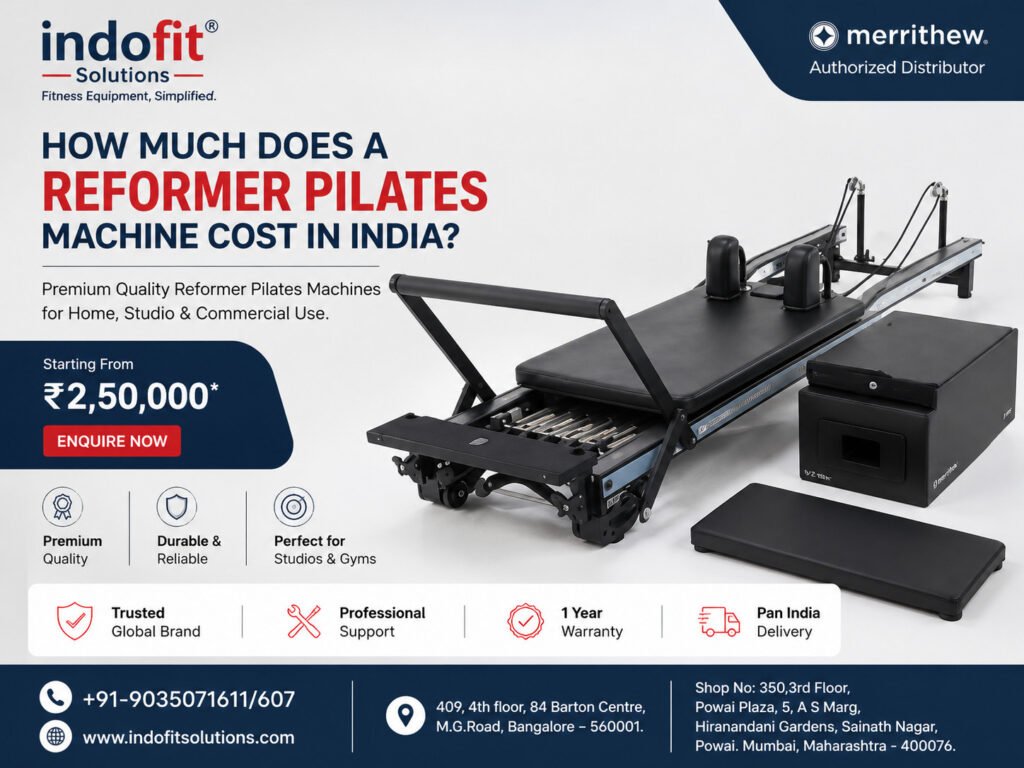
Have you ever wondered if investing in professional fitness equipment is truly worth the price tag for your home studio? Navigating the reformer Pilates machine cost in India can feel overwhelming due to the vast differences between entry-level gear and high-end professional setups. Pricing is heavily influenced by frame durability, spring tension quality, and the comfort of the upholstery. Whether you are looking for imported luxury or reliable Indian-made alternatives, understanding these variables is essential for your budget. We will explore how to calculate your return on investment for commercial spaces and highlight the premium options available through the Indofit line. Let’s dive into the details to help you make an informed decision for your fitness journey. Key Takeaways What Is the Reformer Pilates Machine Cost in India? Navigating the reformer Pilates price India market requires a clear look at what you are actually paying for. Prices vary significantly based on the build quality, the complexity of the spring system, and the intended environment for the equipment. Typical Price Range for Studio-Grade Reformers Studio-grade equipment is built to withstand the heavy demands of a commercial environment. These machines often feature reinforced steel or high-grade hardwood frames to ensure maximum durability during back-to-back sessions. You can expect to invest anywhere from ₹250,000 to over ₹500,000 for professional-tier units that offer extensive adjustability. Typical Price Range for Home-Use Reformers If you are setting up a personal space, home-use models prioritize compact footprints and ease of storage. The reformer Pilates machine cost for these units typically ranges from ₹80,000 to ₹200,000. These machines are designed for lighter, daily use while still providing a smooth, effective workout experience. “Quality equipment is an investment in your long-term health, ensuring that every movement is supported by precision engineering and reliable resistance.” What Each Price Tier Usually Includes Understanding the features within each price bracket helps you make an informed decision. Manufacturers adjust materials and accessories to meet specific user needs, ranging from basic home setups to fully loaded professional stations. Entry-Level and Affordable Reformers These models focus on essential functionality. They often use lighter aluminum frames and standard spring sets, making them perfect for beginners who want to practice at home without a massive financial commitment. Mid-Range Reformers for Regular Training Mid-range units offer a significant upgrade in comfort and versatility. You will typically find better upholstery, more robust carriage wheels for a quieter glide, and additional accessories like jump boards or boxes included in the package. Premium Reformers for Studios and Professionals Premium machines represent the gold standard in the industry. They feature high-density foam padding, advanced spring systems for precise resistance, and highly adjustable footbars to accommodate diverse body types and training styles. Tier Frame Material Best For Durability Entry-Level Light Aluminum Home Beginners Moderate Mid-Range Reinforced Steel Regular Users High Premium Hardwood/Steel Commercial Studios Professional Studio Versus Home Reformer Pilates Prices Not all Pilates reformers are built the same, especially when comparing studio-grade units to those designed for home use. Understanding these differences helps you make a smart financial decision that aligns with your long-term fitness journey. How Studio Equipment Prices Differ From Home Models Commercial reformers are engineered to withstand the rigors of back-to-back classes. Manufacturers use heavy-duty steel or premium hardwoods to ensure the frame remains stable under constant stress. These machines often feature sophisticated spring systems and high-end upholstery that resists wear from dozens of users daily. In contrast, a reformer Pilates machine for home use is typically designed with a focus on efficiency and cost-effectiveness. While they offer excellent functionality, they often utilize lighter materials to keep the price point accessible for individual buyers. You are essentially paying for the durability required to support a high-traffic environment when you choose a studio model. When a Home Reformer Pilates Machine Is the Better Choice If you are the primary user and plan to train a few times a week, a home-focused model is usually the perfect fit. These machines provide the essential resistance and support needed for a full-body workout without the premium price tag of commercial gear. They are ideal for personal wellness and allow you to practice on your own schedule. When a Commercial Studio Reformer Is Worth the Higher Cost A commercial unit becomes a wise investment if you operate a studio or have multiple household members using the equipment daily. The superior build quality ensures that the machine maintains its precision over years of intense use. You are paying for long-term reliability and a consistent feel that matches the professional classes you might attend elsewhere. Space, Weight Capacity, and Storage Requirements Home models often prioritize a smaller footprint and may include folding mechanisms or wheels for easy storage. Commercial units are usually fixed in place, requiring a dedicated area in your home or studio. Always check the weight capacity, as studio models are built to accommodate a wider range of body types and intensity levels. Expected Usage and Durability Think about how often you will actually use the machine. If you anticipate daily, high-intensity sessions, the robust construction of a studio reformer will prevent premature degradation. For occasional users, the standard durability of a home-grade machine is more than sufficient for years of service. Delivery, Installation, and Maintenance Costs Commercial equipment often requires professional delivery and assembly due to its size and weight. You should also factor in the cost of routine maintenance, such as spring replacements and cable adjustments. Home units are frequently designed for easier self-assembly, saving you on initial setup fees. Feature Home Reformer Studio Reformer Primary Use Individual/Family Commercial/High-Traffic Construction Lightweight/Compact Heavy-Duty/Steel/Hardwood Storage Often Foldable Fixed/Stationary Maintenance Low/DIY Regular/Professional Which Features Affect Reformer Pilates Equipment Prices? Understanding the factors that influence reformer Pilates equipment prices is essential for making a smart investment. While it is tempting to look for the lowest price, the cost of a machine often reflects the quality of its engineering and the durability of its components. Frame Material and Construction Quality The frame is the backbone of
How to Choose Interlocking Tiles for a Commercial Gym
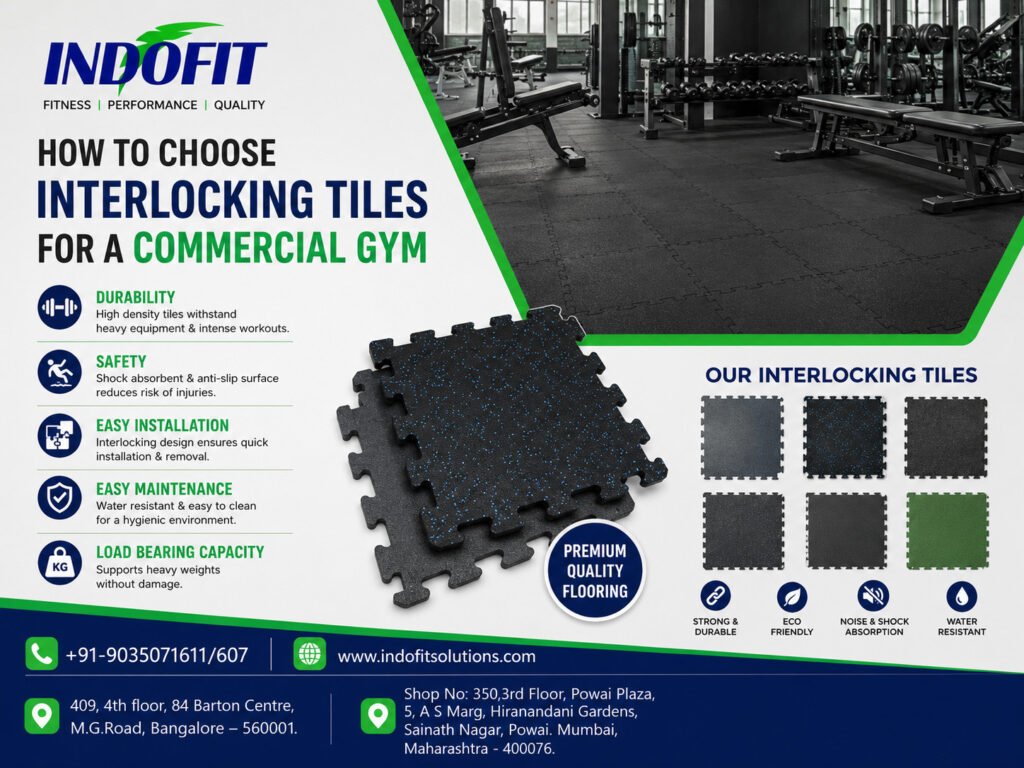
Have you ever wondered why some fitness centers feel solid underfoot while others seem to wear down after just a few months? The secret often lies in the foundation. Selecting the right interlocking tiles for commercial gym spaces is a critical decision that impacts both member safety and your long-term operational costs. You must balance heavy load capacity with the specific needs of free-weight zones. High-quality gym flooring tiles provide essential shock absorption, protecting your subfloor from intense impact. Whether you choose EPDM or traditional rubber, the thickness should vary based on whether the area is used for cardio, strength training, or functional movement. Proper installation and a consistent maintenance routine are just as vital as the initial material choice. By investing in durable solutions, such as the specialized rubber flooring range from Indofit, you ensure a professional environment that stands the test of time. Making an informed choice today prevents costly repairs tomorrow. Key Takeaways Assess the Demands of Your Commercial Gym Selecting the right flooring starts with a deep dive into your gym’s daily operations. You must evaluate how your members interact with the space to ensure long-term success. By choosing commercial grade interlocking tiles, you provide a stable and safe environment for every athlete. Map traffic levels, equipment weight, and workout styles. Every zone in your facility experiences different levels of stress. High-traffic areas like entryways and cardio rows require materials that resist surface wear. Meanwhile, heavy lifting zones demand flooring that can handle extreme pressure without indenting or cracking. Separate standard training areas from free-weight zones It is essential to categorize your floor space based on the intensity of the activity. Standard training areas might only need moderate cushioning, but free-weight zones require specialized protection. Why dropped barbells require heavy-duty gym tiles When a heavy barbell hits the floor, it creates a concentrated impact that can damage standard subfloors. Heavy-duty tiles absorb this energy, protecting both the equipment and the structural integrity of your building. How rolling loads and repeated foot traffic affect durability Rolling loads from heavy equipment racks can cause tiles to shift or separate over time. High-quality commercial-grade interlocking tiles are designed to lock firmly together, preventing gaps even under constant movement. Prioritize commercial-grade performance over residential specifications. Many owners are tempted by cheaper residential options, but these rarely survive the rigors of a public gym. Residential flooring lacks the density required to withstand 24/7 usage and heavy impact. Check warranties, wear resistance, and dimensional stability. Always review the technical data before making a purchase. Dimensional stability ensures that your tiles will not expand or shrink due to temperature changes, keeping your seams tight and safe. Feature Residential Flooring Commercial Grade Durability Low High Warranty Limited Comprehensive Impact Resistance Minimal Superior Maintenance Frequent Low Match Load Capacity to Free-Weight and Equipment Zones Managing the physical stress of a commercial gym requires a strategic approach to flooring selection. You must carefully balance the needs of static equipment with the high-impact nature of free-weight training to ensure long-term durability. Understand static load capacity for racks, machines, and storage. Static load capacity refers to the weight an object exerts on the floor while remaining stationary. Heavy machines, storage racks, and cable systems create constant pressure that can cause indentations in softer materials over time. It is essential to choose flooring that maintains its structural integrity under this sustained weight. High-density materials prevent the “sinking” effect that often ruins the aesthetic and functional quality of a gym floor. Evaluate impact resistance for dumbbell and barbell drops. Unlike static machines, free-weight zones experience sudden, high-energy impacts. When a heavy barbell hits the ground, the floor must absorb and dissipate that energy to protect the subfloor from damage. Distinguish concentrated loads from evenly distributed loads. Concentrated loads occur when a small surface area, such as a dumbbell end, strikes the floor with significant force. Evenly distributed loads, by contrast, are spread across a wider footprint, such as the base of a leg press machine. Use protective platforms beneath power racks when appropriate. For areas where heavy lifting is the primary focus, standard flooring may not be enough. Protective platforms provide an extra layer of shock absorption and surface protection, effectively shielding the base floor from the most intense drops. Select reinforced interlocking rubber tiles for high-load areas. When outfitting your facility, you should prioritize heavy-duty gym tiles designed for extreme conditions. These specialized products offer superior resilience compared to standard residential options. Inspect tile density, edge fit, and resistance to compression. When evaluating potential products, look for the following quality indicators: Avoid using one flooring specification throughout the entire facility. A common mistake is assuming that one type of flooring works for every zone. You should tailor your material choices based on the specific activity occurring in each area of your gym. By utilizing heavy-duty gym tiles in high-impact zones and lighter, more cushioned options in cardio areas, you create a balanced environment. This targeted approach maximizes the lifespan of your investment while keeping your members safe and comfortable. Compare Shock Absorption Ratings and User Comfort When you prioritize shock absorption, you directly influence the long-term comfort and safety of your athletes. Investing in durable gym flooring is not just about aesthetics; it is about creating a space that supports high-intensity movement while minimizing physical strain. Connect shock absorption to joint comfort and training intensity. High-impact exercises like box jumps or burpees place significant stress on the ankles, knees, and hips. A floor with proper shock absorption acts as a buffer, absorbing the energy that would otherwise travel directly into the user’s joints. By selecting materials that offer the right level of “give,” you can significantly reduce the risk of repetitive strain injuries. This is essential for facilities that host high-intensity interval training or group fitness classes where movement is constant and vigorous. Interpret manufacturer test results and performance ratings. Not all rubber tiles are created equal, and performance data is your best tool for comparison. When evaluating
Gym Accessories Supplier India – Essential Equipment Every Gym Needs
Running a successful fitness facility requires more than just space; it demands high-quality tools that keep members coming back. Choosing the right gym accessories supplier in India is a critical step in building a professional atmosphere that attracts both beginners and elite athletes. When your facility features durable and versatile equipment, you naturally boost member retention. Investing in premium gear ensures that your space remains safe, functional, and inviting for everyone who walks through your doors. By partnering with a reliable source, you guarantee that your business meets modern fitness standards with ease. Key Takeaways The Role of a Reliable Gym Accessories Supplier India Finding a reliable gym accessories supplier in India is more than just a transaction; it is a strategic investment. A professional partner understands that your equipment is the heartbeat of your business. By choosing the right source, you ensure that your members have access to gear that performs consistently every single day. Why Sourcing Quality Matters for Your Facility Investing in premium-grade materials is essential for minimising long-term maintenance costs. When you source from a reputable gym accessories supplier in India, you reduce the risk of frequent equipment failure. High-quality gear withstands the rigours of intense training sessions, keeping your facility running smoothly without unexpected downtime. “Quality is not an act; it is a habit. In the fitness industry, the equipment you provide defines the standard of your service.” — Industry Expert Low-quality alternatives often lead to hidden costs, such as constant repairs or premature replacements. Choosing durable products ensures that your capital is spent wisely. This approach allows you to focus on growing your community rather than fixing broken machines. Feature Low-Quality Gear Premium-Grade Equipment Maintenance Needs High/Frequent Low/Minimal Lifespan Short-term Long-term Member Safety High Risk Certified Safe Cost Efficiency Expensive over time Cost-effective Evaluating Durability and Safety Standards Safety is the most critical aspect of any fitness environment. A trustworthy gym accessories supplier in India must provide products that meet international health and safety benchmarks. You should always verify that the equipment comes with proper certifications to protect your members and your business liability. Durability is not just about the material; it is about the engineering behind the product. Look for suppliers who prioritize rigorous testing protocols. By ensuring your gear meets these high standards, you create a professional atmosphere that builds trust with your clientele. Functional Training Accessories for Versatile Workouts Building a space that caters to athletic development requires the right selection of functional training accessories. These tools allow members to perform dynamic movements that translate directly into real-world strength and improved athletic performance. By moving away from static machines, you provide your members with the freedom to engage multiple muscle groups simultaneously. This approach is essential for creating a modern, high-energy environment that appeals to athletes of all skill levels. Kettlebells and Their Role in Explosive Power Kettlebells are a staple in any gym focused on explosive power and functional movement. Their unique center of gravity forces the body to stabilize during every swing, snatch, or clean. Incorporating these versatile functional training accessories into your facility helps members build significant posterior chain strength. “The kettlebell is the ultimate tool for those who want to combine strength, endurance, and mobility into a single, efficient workout.” Battle Ropes for Cardiovascular Endurance Battle ropes offer an intense, low-impact way to boost cardiovascular endurance while simultaneously challenging the upper body. They are perfect for high-intensity interval training (HIIT) sessions where time is limited but results are paramount. Because these functional training accessories are easy to store and set up, they are ideal for small studios or crowded gym floors. Members love the immediate feedback and the intense metabolic burn they experience during a rope circuit. Plyometric Boxes for Agility Training Plyometric boxes are essential for developing explosive speed and vertical jump capabilities. Whether your members are beginners or seasoned athletes, these boxes provide a safe way to practice landing mechanics and power output. When you choose high-quality functional training accessories like durable, non-slip plyometric boxes, you ensure both safety and longevity for your gym. Investing in these tools allows your members to push their limits and achieve their athletic goals with confidence. Essential Resistance Training Tools for Strength Gains Strength gains are rarely accidental; they are the result of consistent effort using high-quality resistance training tools. These items provide the necessary stimulus for muscle hypertrophy and help athletes achieve progressive overload safely. By stocking your facility with the right gear, you empower members to push their limits and reach their fitness goals. High-Grade Resistance Bands for Progressive Overload Resistance bands are incredibly versatile resistance training tools that offer constant tension throughout every movement. Unlike traditional weights, these bands provide variable resistance that challenges muscles at the peak of the contraction. This unique feature makes them perfect for both rehabilitation exercises and intense strength training sessions. High-grade latex bands are highly durable and resistant to snapping, even under heavy loads. They allow members to easily adjust the intensity of their workouts without needing to swap out heavy iron plates. This flexibility is a major advantage for busy gym floors. Adjustable Dumbbells for Space-Efficient Lifting For facilities with limited square footage, adjustable dumbbells are a game-changer. These space-efficient units replace entire racks of traditional weights, allowing you to maximize your floor space while offering a full range of lifting options. Members appreciate the ability to switch weights in seconds with a simple dial or pin mechanism. This efficiency keeps the workout flow moving smoothly, which is essential during peak hours. Investing in these tools ensures that your gym remains clutter-free and highly functional. Weightlifting Belts and Wrist Wraps for Safety Providing supportive gear is a hallmark of a professional gym environment. Weightlifting belts offer the core stability needed for heavy compound lifts like squats and deadlifts. They help members maintain proper form, which significantly reduces the risk of injury during high-intensity training. Wrist wraps are equally important for protecting joints during pressing movements. By offering these
Exercise Bike Supplier Mumbai – Cardio Equipment Buying Guide
Welcome to your journey toward a healthier lifestyle. Finding the right exercise bike supplier in Mumbai is the first step in building a home gym that truly works for you. Whether you are a beginner or a seasoned athlete, your choice of gear dictates your long-term success. Selecting the best cardio equipment can transform your daily routine into an exciting habit. We designed this fitness equipment guide to help you navigate the current market with confidence. By understanding your specific needs, you ensure that your investment provides lasting value and performance. Making an informed purchase decision is essential for your wellness goals. We are here to help you find reliable solutions that fit your space and budget perfectly. Let’s explore how you can elevate your fitness experience today. Key Takeaways Understanding Your Fitness Goals Before You Buy Defining your primary fitness goals is the most important step in selecting the right equipment for your home. Before you browse through endless catalogs, take a moment to decide if your main focus is weight loss, muscle toning, or building cardiovascular endurance. Knowing your “why” prevents you from purchasing machines that eventually end up gathering dust in a corner. There are many indoor cycling benefits that cater to everyone, from complete beginners to seasoned athletes. If you are looking to shed pounds, high-intensity interval training on a bike can be incredibly effective. For those focused on muscle toning, adjusting the resistance levels allows you to target your legs and core effectively. When you are buying fitness gear, it is essential to align your choice with your current lifestyle. Consider how much time you can realistically dedicate to training each week. A bike that fits your schedule and your physical needs ensures that you stay motivated for the long haul. Ultimately, the right equipment acts as a partner in your health journey. By prioritizing your specific needs, you can enjoy the various indoor cycling benefits while making a smart investment. Taking this time now makes the process of buying fitness gear much more rewarding and successful. Choosing the Right Exercise Bike Supplier Mumbai Selecting a reliable exercise bike supplier in Mumbai requires careful consideration of service and quality. While the features of a bike are important, the company behind the sale ensures your long-term satisfaction. A great partner provides more than just a box; they offer peace of mind through reliable warranty support and professional assembly services. When evaluating potential providers, look for a proven track record in customer service. You want a team that understands the technical specifications of modern cardio machines. A knowledgeable exercise bike supplier in Mumbai will guide you through the nuances of resistance levels, digital displays, and ergonomic adjustments to match your specific fitness goals. Quality brands are another hallmark of a reputable dealer. Established suppliers typically carry equipment from manufacturers known for durability and safety. By choosing a local provider, you ensure that help is always nearby if you ever require maintenance or troubleshooting assistance. Consider the following factors when comparing different providers to ensure you receive the best value for your investment: Service Feature Standard Supplier Premium Partner Assembly Support Self-Assembly Professional Installation Warranty Handling Manufacturer Only Direct Local Support Technical Advice Limited Expert Consultation Maintenance Plans Not Available Annual Service Packages Ultimately, your choice of an exercise bike supplier in Mumbai acts as an insurance policy for your fitness equipment. Investing time into researching your local options will pay off in the form of a smoother, more enjoyable workout experience for years to come. Comparing Bike Types: Upright vs. Recumbent Finding the perfect bike for your home gym starts with understanding how different designs impact your body. While both machines provide excellent cardiovascular training, they offer distinct mechanical experiences that cater to different needs. Selecting the right upright exercise bike or a supportive recumbent model depends on your specific comfort preferences and fitness goals. Benefits of Upright Bikes for Traditional Cycling The upright model is designed to mimic the posture of a standard outdoor road bike. This position engages your core muscles more actively as you maintain balance and stability throughout your ride. It is a fantastic choice for those who want a dynamic workout that feels like a real cycling session. Many users prefer this style because it allows for both seated and standing positions. By shifting your weight, you can target different muscle groups in your legs and glutes. This versatility makes the upright exercise bike a staple for high-intensity interval training and endurance building. Advantages of Recumbent Bikes for Joint Support If you prioritize comfort, you should explore the specific recumbent bike benefits that set these machines apart. These bikes feature a bucket-style seat with a backrest, which significantly reduces strain on your lower back and hips. This design is widely recognized as a premier option for joint-friendly cardio. Because your legs are positioned in front of you rather than beneath you, there is less impact on your knees and ankles. This makes them an ideal solution for individuals recovering from injuries or those who prefer a more relaxed, steady-state workout. You can enjoy a long, effective session without the typical fatigue associated with traditional upright seating. Feature Upright Bike Recumbent Bike Posture Vertical/Aggressive Reclined/Supported Core Engagement High Low Joint Impact Moderate Minimal Best For Endurance/Intensity Comfort/Rehabilitation High-Intensity Training: Spin Bikes vs Air Bikes Choosing the right equipment for your fitness journey often comes down to a battle between spin bikes and air bikes. Both machines serve as excellent tools for high-intensity interval training, yet they offer very different experiences for the user. Understanding these differences helps you align your purchase with your specific health goals. Why Spin Bikes are Ideal for Endurance Spin bike training is widely recognized for its ability to build cardiovascular stamina through steady-state power output. These bikes feature a weighted flywheel that provides consistent momentum, allowing you to maintain a rhythmic pace for extended periods. This makes them a staple for cyclists who want to improve their
Spin Bikes for Gym Mumbai – Best Choices for Fitness Studios
The fitness industry in India is currently experiencing a massive surge in popularity. Nowhere is this energy more visible than in the vibrant, fast-paced environment of the city. Studio owners are constantly searching for effective ways to stand out in such a competitive market. Investing in a high-quality spin bike for Gym Mumbai is a strategic move to attract and retain dedicated members. Premium equipment signals to your clients that you prioritize their health and overall experience. Reliable hardware does more than just improve the aesthetic of your space. It ensures safety and comfort, which are essential for building long-term loyalty. Selecting the right gear is truly the foundation of a successful fitness business. Key Takeaways The Rise of Indoor Cycling in Mumbai Fitness Culture Mumbai’s fitness landscape is undergoing a massive transformation as indoor cycling takes centre stage. This shift reflects a broader change in Mumbai fitness culture, where health and wellness have become top priorities for the city’s active population. As more people seek engaging ways to stay fit, the demand for high-quality cycling experiences continues to climb. Why Mumbai Studios Are Investing in Premium Cycling Top-tier studios are now prioritising premium gym equipment to differentiate themselves in a competitive market. Investing in high-end bikes is no longer just about utility; it is a bold statement of quality and commitment to member success. These studios understand that providing a superior ride keeps members motivated and coming back for more. By choosing industry-leading hardware, gym owners create an environment that feels exclusive and professional. This focus on excellence helps build a loyal community that values the best tools for their fitness journey. Quality equipment acts as a magnet for those who refuse to settle for anything less than a top-tier experience. Meeting the Demands of the Modern Urban Athlete The modern urban athlete in Mumbai leads a fast-paced life that leaves little room for wasted time. These individuals require workouts that are both efficient and highly effective, delivering maximum results in a short window. Indoor cycling fits this need perfectly by offering a high-intensity, low-impact solution that fits into a busy schedule. Studios are adapting by offering streamlined classes that focus on performance tracking and data-driven progress. This approach resonates with professionals who want to see tangible improvements in their endurance and strength. By catering to this need for efficiency, gyms are successfully capturing the attention of the city’s most driven individuals. Essential Commercial Spin Bike Features for High-Traffic Studios When you manage a busy gym, the quality of your spin bikes determines your long-term success. A high-traffic fitness studio demands equipment that can withstand hours of intense, daily use without breaking down. Investing in professional-grade gear is the best way to protect your capital and keep your members happy. Durability and Frame Construction The foundation of any great cycle is its frame. You should prioritise durable gym frames that feature heavy-gauge steel and advanced powder coating. These materials are essential for resisting the sweat-induced corrosion that often plagues indoor cycling equipment. Reliability is non-negotiable in a commercial setting. A robust frame ensures that the bike remains stable even during high-intensity sprints or heavy resistance climbs. By choosing high-quality construction, you minimise maintenance costs and downtime for your facility. Ergonomics and Adjustability for Diverse Users Your members come in all shapes and sizes, so your equipment must be versatile. The best commercial spin bike features include micro-adjustable handlebars and seats that allow for a custom fit. This ensures that every rider can maintain proper form, which reduces the risk of injury. Connectivity and Performance Tracking Consoles Modern riders expect more than just a workout; they want data. Integrated performance tracking consoles allow members to monitor their power output, heart rate, and cadence in real-time. This level of feedback keeps users motivated and helps them track their fitness journey over time. Advanced consoles often sync with popular fitness apps, creating a seamless experience for the tech-savvy athlete. Providing this digital connectivity is a great way to differentiate your studio from competitors. When members can see their progress, they are much more likely to return for their next class. Understanding Resistance Systems: Magnetic vs. Friction The feel of a ride is defined by the technology hidden inside the bike’s frame. When you are looking at resistance systems explained, you will find two primary methods used in the fitness industry today. Each approach offers a unique experience for the rider and requires different levels of care. The Mechanics of Friction Resistance Friction resistance works much like the brakes on a traditional bicycle. A physical pad, usually made of felt or leather, presses directly against the flywheel to create drag. This system is highly intuitive for beginners because it uses a simple manual knob to increase or decrease intensity. However, because the pad physically rubs against the metal, it creates friction that eventually leads to wear and tear over time. Why Magnetic Resistance is the Industry Standard Most modern studios now prefer magnetic resistance benefits because they offer a much smoother ride. Instead of physical contact, these systems use powerful magnets that hover near the flywheel to create resistance through eddy currents. This design is virtually silent and provides a consistent feel that does not change as the bike warms up. Because there is no physical contact, the components do not degrade, making it a highly reliable choice for high-traffic environments. Maintenance Requirements for Mumbai’s Climate Mumbai’s high humidity poses a unique challenge for gym equipment. Friction-based systems are particularly vulnerable, as moisture can cause the pads to degrade faster or lead to rust on the flywheel surface. Magnetic systems are generally more resistant to these environmental factors since they lack porous materials like felt pads. Regardless of the system, regular cleaning and lubrication are essential to keep your fleet in top condition. Feature Friction Resistance Magnetic Resistance Noise Level Moderate to High Near Silent Maintenance Frequent Pad Replacement Minimal Consistency Varies with Heat Highly Consistent Durability Lower Higher Top Picks for
Best Heavy Duty Treadmill for Gym Use in India
Choosing the right heavy-duty treadmill for gym use is critical for commercial facilities. India’s fitness industry is growing rapidly. More gyms, hotels, and wellness centers are opening every year. The demand for reliable commercial cardio equipment has never been higher. Gym owners face a major challenge when selecting treadmills. Residential models simply do not meet commercial demands. They wear out quickly under heavy usage. Poor equipment leads to unhappy members and costly repairs. Investing in a commercial treadmill for the gym ensures long-term reliability. It supports continuous operation and high user traffic. This guide covers everything gym owners need to know before buying. You will learn about key specifications, durability factors, and important features. We also cover common buying mistakes and how to avoid them. Understanding Heavy-Duty Treadmills for Commercial Gyms A heavy-duty commercial treadmill is designed for continuous, high-volume use. It differs significantly from a residential treadmill. Commercial treadmills are built for gyms, fitness centers, and health clubs. They handle multiple users daily for extended hours. Residential treadmills are designed for one or two users only. Key differences between commercial and residential models include the following: Durability is the most critical factor in commercial environments. A treadmill that fails during peak hours disrupts member experience. It also leads to expensive downtime and repair costs. A gym treadmill machine must withstand 8 to 16 hours of daily operation. It must perform consistently without frequent breakdowns. Key Commercial Treadmill Specifications to Evaluate Understanding technical specifications helps gym owners make informed decisions. Here are the most important specs to evaluate. Motor Power and Continuous Horsepower Motor power is the most important specification in a commercial gym treadmill. It directly affects performance and longevity. Continuous Horsepower (CHP) measures the sustained power output of the motor. This is different from peak horsepower. Peak horsepower is the maximum power at short bursts only. For commercial gyms, a minimum of 3.0 CHP is recommended. High-traffic facilities should look for 4.0 CHP or higher. Higher CHP means the motor works less hard under load. This extends motor life significantly. A treadmill for heavy usage requires a powerful, efficient motor to perform reliably all day. Running Surface Size The running surface directly affects user comfort and safety. A wider and longer belt accommodates more users comfortably. Recommended running surface dimensions for commercial use: A larger running surface reduces user fatigue. It also accommodates users of different heights and stride lengths. Speed and Incline Range A professional treadmill for a gym should offer wide speed and incline ranges. Speed ranges from 0.5 to 20 km/h cover all fitness levels. From walking and jogging to high-intensity sprinting, versatility matters. Incline ranges of 0% to 15% support fat burning, strength training, and rehabilitation programs. Greater versatility means the treadmill serves more users effectively. This improves member satisfaction and equipment utilization. Maximum User Weight Capacity Weight capacity is a critical safety specification for commercial facilities. Most commercial treadmills support 135 kg to 180 kg per user. A higher weight capacity reflects stronger structural construction. It also ensures the treadmill accommodates a diverse user base. Gym owners should select models that comfortably exceed the expected user range. Shock Absorption System A quality shock absorption system protects users and the equipment. It reduces impact on joints during running. This is particularly important for older users and rehabilitation clients. Good cushioning systems extend belt and deck lifespan. They also reduce noise and vibration during operation. Look for multi-zone or adjustable cushioning systems in commercial models. Continuous Horsepower Explained Continuous Horsepower (CHP) is one of the most misunderstood treadmill specifications. Many buyers confuse it with peak horsepower. Peak horsepower is the maximum motor output at peak load. It is only sustained for short durations. CHP is the power the motor delivers continuously during normal operation. For a high-performance treadmill for gym environments, CHP matters far more than peak horsepower. A treadmill with 2.5 CHP but 4.0 peak HP will underperform in commercial settings. The motor will overheat quickly under sustained load. This shortens motor life and increases maintenance costs. Recommended CHP ratings for commercial gyms: A higher CHP rating also results in smoother belt movement. Users experience a more consistent and comfortable workout. Durability and Frame Quality Frame quality determines the long-term lifespan of commercial treadmills. A strong frame withstands years of heavy daily use. Steel Frame Construction Commercial treadmills use heavy-gauge steel frames. Steel provides the structural rigidity needed for commercial environments. It supports higher user weights and absorbs vibrations effectively. Welded Frame Design Welded frames are stronger than bolted frame assemblies. Welded joints do not loosen over time with repeated use. This reduces maintenance requirements and improves long-term stability. Corrosion Resistance Gym environments expose equipment to sweat and humidity. Powder-coated and rust-resistant finishes protect the frame. Corrosion resistance extends equipment lifespan significantly in Indian climates. Commercial Grade Components A genuine commercial cardio equipment solution uses commercial-grade motors, rollers, and decks. Larger diameter rollers reduce belt wear. High-density decks last significantly longer than residential decks. Commercial-grade bearings reduce friction and extend component life. Long-Term Maintenance Considerations Quality frame construction reduces ongoing maintenance costs. A durable frame does not flex or crack under repeated stress. This prevents secondary component damage caused by frame movement. Selecting equipment with replaceable components is also important. Easy access for servicing reduces downtime during maintenance. Treadmill Performance During Peak Gym Hours Commercial gyms face their greatest equipment demands during peak hours. Morning and evening rush periods can see multiple treadmills running simultaneously. A treadmill for heavy usage must handle continuous operation without performance loss. This requires superior motor design and thermal management. Key performance considerations for peak gym hours: Poor motor cooling leads to thermal shutdowns during busy periods. This frustrates members and disrupts gym operations. Always verify the cooling system specifications before purchasing. Recommended Features for Modern Gyms Modern gym fitness treadmill models offer a range of features that improve member experience and gym management. Advanced Console Displays Large, clear displays improve the user experience. HD touchscreen consoles allow
Motorized Treadmill Supplier Bangalore – Complete Buyer Guide
Bangalore’s fitness industry is growing rapidly. More gyms, corporate wellness centers, and home users are investing in quality fitness equipment every year. Among all fitness machines, the motorized treadmill remains the most popular choice. Choosing the right motorized treadmill supplier Bangalore buyers can trust requires research. This guide helps gym owners, corporate wellness managers, home fitness buyers, and facility operators make informed purchasing decisions. From understanding motor power to evaluating safety features, this buyer guide covers everything you need to know before investing in a motorized treadmill in Bangalore. Understanding Motorized Treadmills What Is a Motorized Treadmill? A motorized treadmill is a powered fitness machine. An electric motor drives the running belt at a controlled speed. Users walk, jog, or run at their chosen pace. Unlike manual treadmills, motorized versions offer consistent speed control. The user does not need to push the belt with their own effort. How Motorized Treadmills Work The motor connects to the running belt through a drive system. When powered on, the motor rotates the front roller. This rotation moves the belt at the set speed. Most motorized treadmills offer speeds ranging from 1 km/h to 20 km/h or more. Commercial models often reach higher maximum speeds for intense athletic training. Key Components A motorized treadmill typically includes the following: Common Applications Motorized treadmills are widely used in commercial gyms, corporate fitness centers, hotels, rehabilitation clinics, sports academies, residential apartments, and home fitness setups. Benefits of Motorized Treadmills Convenient Indoor Workouts Users can exercise regardless of weather conditions. There is no need to go outside for walking or running sessions. This makes motorized treadmills ideal for Bangalore’s monsoon season and summer heat. Adjustable Speed Control Speed can be set precisely. Users can start slow and gradually increase intensity. This makes workouts safe and systematic for all fitness levels. Improved Cardiovascular Fitness Regular treadmill workouts strengthen the heart and lungs. Consistent cardio exercise reduces the risk of cardiovascular diseases. Doctors and physiotherapists frequently recommend treadmill walking for cardiac rehabilitation. Weight Management Support Walking and running on a treadmill burns calories effectively. Combined with a balanced diet, regular treadmill workouts support healthy weight management goals. User-Friendly Operation Most motorized treadmills have straightforward digital consoles. Users can easily adjust speed and incline. Pre-programmed workout modes help beginners follow structured routines. Consistent Workout Experience The belt maintains a constant speed throughout the session. This helps users train at a targeted intensity without fluctuations. Consistent effort leads to more predictable fitness outcomes. Suitable for Multiple Fitness Levels From seniors doing light walks to athletes doing sprint intervals, motorized treadmills accommodate a wide range of users. Variable speed and incline settings make this possible. Home vs. Commercial Usage Understanding the difference between home use and commercial treadmills is important for every buyer. Home Use Treadmills Home treadmills are designed for light to moderate personal use. Key characteristics include the following: Home treadmills typically feature motors between 1.5 HP and 3.0 HP (continuous duty). They are not designed for continuous multi-user operation. Commercial Treadmills Commercial treadmills are engineered for high-traffic environments. Key characteristics include the following: Comparison Table: Home vs Commercial Treadmills Feature Home Use Treadmill Commercial Treadmill Motor Power 1.5 – 3.0 HP (CD) 3.5 – 5.0 HP+ (CD) Daily Usage 1–2 hours 8–12+ hours User Capacity 1–2 users Multiple users Weight Capacity Up to 120 kg Up to 180 kg+ Running Surface Standard Wider and longer Frame Lighter steel Heavy-duty steel Warranty 1–3 years 3–5 years or more Price Range Budget to mid-range Mid to premium Folding Design Often available Usually non-folding Console Basic to mid-level Advanced with touchscreen Important Safety Features to Consider Safety is a non-negotiable consideration when purchasing a motorized treadmill. Emergency Stop Key Every treadmill must have a magnetic safety key. This key attaches to the user’s clothing. If the user stumbles or falls, the key detaches and the belt stops immediately. Safety Lock Systems Some models include automatic lock features. These prevent unauthorized use, which is useful in homes with children or institutional settings. Side Rails Sturdy side rails allow users to maintain balance. They are especially important for elderly users and rehabilitation patients. Shock Absorption Technology Running on hard surfaces increases joint stress. Quality treadmills incorporate cushioning systems in the deck. These systems reduce impact on knees, ankles, and hips. Stable Running Surface The running belt must be wide and long enough for the intended user. A narrow belt increases the risk of slipping off the sides. Overload Protection Commercial motors include thermal overload protection. This feature prevents motor burnout during extended operation. It is a critical safety and durability feature. Child Safety Functions Keypad lock functions prevent children from accidentally operating the treadmill. This is an important safety consideration for home buyers with young children. Noise Reduction Technology in Modern Treadmills Noise levels are a common concern, especially for home buyers and hotel fitness centers. Motor Insulation Premium treadmill motors use enclosed casings with sound insulation. This reduces the operational hum that is common in lower-quality machines. Vibration Reduction Systems Rubber dampers and anti-vibration mounts reduce mechanical vibrations. These systems minimize the noise transmitted to floors and walls. Cushioning Technologies High-quality cushioning decks absorb impact sound as well as shock. This results in quieter operation during walking and running sessions. Belt Quality Multi-layer running belts with anti-static properties produce less noise. Thicker belts also reduce the sound of footfalls on the deck surface. Frame Stability A rigid, well-welded frame eliminates flex and rattle. Cheap frames vibrate at higher speeds, producing significant noise. Benefits for Homes and Commercial Facilities Quieter treadmills create a more pleasant workout environment. In apartment buildings, noise reduction is essential for maintaining good relations with neighbors. Hotels and corporate wellness centers also benefit from quieter equipment in open floor plan facilities. Key Specifications Buyers Should Evaluate Before purchasing any motorized treadmill, evaluate these key technical specifications carefully. Motor Power Motor power is rated in horsepower (HP). Look for continuous duty (CD) ratings, not peak ratings. For home use, a minimum
Why Bangalore Gyms Prefer Commercial Treadmills — And Where to Get the Best Ones
Walk into any serious gym in Bangalore today, and one thing stands out immediately — the treadmill section is almost always the busiest spot on the floor. Whether it’s early morning regulars warming up before a weight session or evening runners clocking their daily kilometres, the demand for reliable, high-performance cardio equipment has never been stronger in this city. But here’s what most gym owners quietly understand: not all treadmills are created equal. A machine that works fine at home will break down within weeks in a commercial setting. The motors burn out. The belts wear thin. The electronics glitch. And suddenly you’ve got frustrated members, bad reviews, and a repair bill you didn’t budget for. That’s exactly why the shift toward purpose-built commercial treadmills in Bangalore is happening so fast – and why IndofitSolutions has become a name that gym owners across the city are trusting with their most important investment. Bangalore’s Fitness Boom Is Real — And It’s Only Getting Bigger Bangalore isn’t just a tech hub anymore. It’s become one of India’s most fitness-conscious cities, driven by a young, health-aware population that takes its workouts seriously. From corporate gyms in Whitefield to boutique fitness studios in Indiranagar and large-format clubs in Koramangala, the number of commercial fitness spaces has grown dramatically over the last few years. This is backed by real numbers. India’s fitness equipment market, currently valued at close to USD 793 million, is projected to nearly double to USD 1,869 million by 2033, growing at a steady 10% annually. Globally, the commercial treadmill segment is seeing some of the fastest growth within this space, driven by the rising number of gym chains and increasing expectations from fitness members. In a city like Bangalore, where gym-goers are informed, comparison-savvy, and quick to switch memberships if the equipment isn’t up to the mark, investing in the right commercial treadmill isn’t optional — it’s the foundation of running a successful facility. Why a Commercial Treadmill Is Not Just a “Bigger Home Treadmill” This is one of the most common misconceptions gym owners — especially first-timers — walk in with. A commercial treadmill is engineered to a completely different standard. Here’s what separates the two: Motor Strength and Continuous Duty Ratings Home treadmills typically run on motors rated at 1.5 to 3 HP, designed for 30–60 minutes of use per day. A commercial-grade machine runs on motors between 3.5 and 5 HP with continuous duty ratings, meaning they can handle 8–12 hours of back-to-back use without overheating or losing performance. Belt and Deck Quality Commercial treadmill belts are multi-ply, thicker, and built to withstand thousands of kilometres of use across multiple users. The decks are usually made from phenolic-coated MDF or high-density materials that absorb impact without cracking under constant load. Frame Construction A commercial frame is welded steel, not the lightweight aluminium or hollow tubing you find on consumer models. It’s built to handle users across a wide weight range, day after day, without the wobble or flex that can make a workout feel unsafe. Warranty and Service Support This is where the real difference shows up in the long run. Commercial treadmills from reputable suppliers like IndofitSolutions come with structured after-sales service agreements, spare parts availability, and on-site maintenance — something a consumer-grade machine simply cannot match. Why Choose IndofitSolutions for Your Gym in Bangalore There’s no shortage of people selling treadmills in this city. What’s rarer is finding a supplier who genuinely understands the fitness business — not just the equipment. IndofitSolutions works specifically with commercial gym owners, fitness studios, hotel gyms, corporate wellness centres, and apartment facilities across Bangalore. The difference in approach is clear from the very first conversation. Curated Equipment, Not a General Catalogue Every machine in the IndofitSolutions portfolio has been selected based on one criterion: will it perform reliably in a commercial environment? The team doesn’t push the most expensive model or the one with the biggest margin. They ask about your floor space, your daily footfall, your member profile, and then recommend accordingly. Local Expertise That Matters Understanding Bangalore’s climate — the humidity in certain areas, the dust in newer localities, the power fluctuation patterns in some older buildings — helps the team advise on the right machines and preventive maintenance schedules. This is the kind of local knowledge that a national brand’s call centre simply cannot replicate. End-to-End Service From helping you plan the layout of your cardio section to installation, calibration, staff training, and scheduled maintenance, IndoFitSolutions handles the full lifecycle of your equipment investment. You don’t have to manage multiple vendors for sales, service, and spares. Transparent Pricing Commercial treadmill pricing in Bangalore varies widely depending on brand, motor capacity, console features, and warranty terms. IndofitSolutions provides clear, itemised quotations so you know exactly what you’re paying for — and why. What Today’s Gym Members Actually Expect from a Treadmill The fitness member of 2025 is a different person from who walked into gyms five years ago. They track their heart rate. They follow structured training plans. They want data — steps, pace, calories, distance — and they want it displayed clearly on a screen they can actually read while running. This shift in expectations has direct implications for what a commercial treadmill needs to offer: Energy efficiency has also become a real consideration. Gym operators in Bangalore are increasingly aware of their electricity bills, and modern commercial treadmills with energy-saving modes and auto-standby features can make a measurable difference in running costs over a year. How the Process Works with IndofitSolutions Getting started is straightforward: Pricing Factors You Should Know About There’s no single answer to “How much does a commercial treadmill cost in Bangalore?” because the price depends on several variables: Generally speaking, a reliable commercial treadmill in Bangalore starts from approximately ₹1,05,000 for entry-level models and can go up to ₹3,25,000 or more for premium heavy-duty machines with advanced console features. Conclusion Bangalore’s fitness industry is growing fast, and gym owners who invest
